Why is Tuscan Salmon a Culinary Physics Triumph?
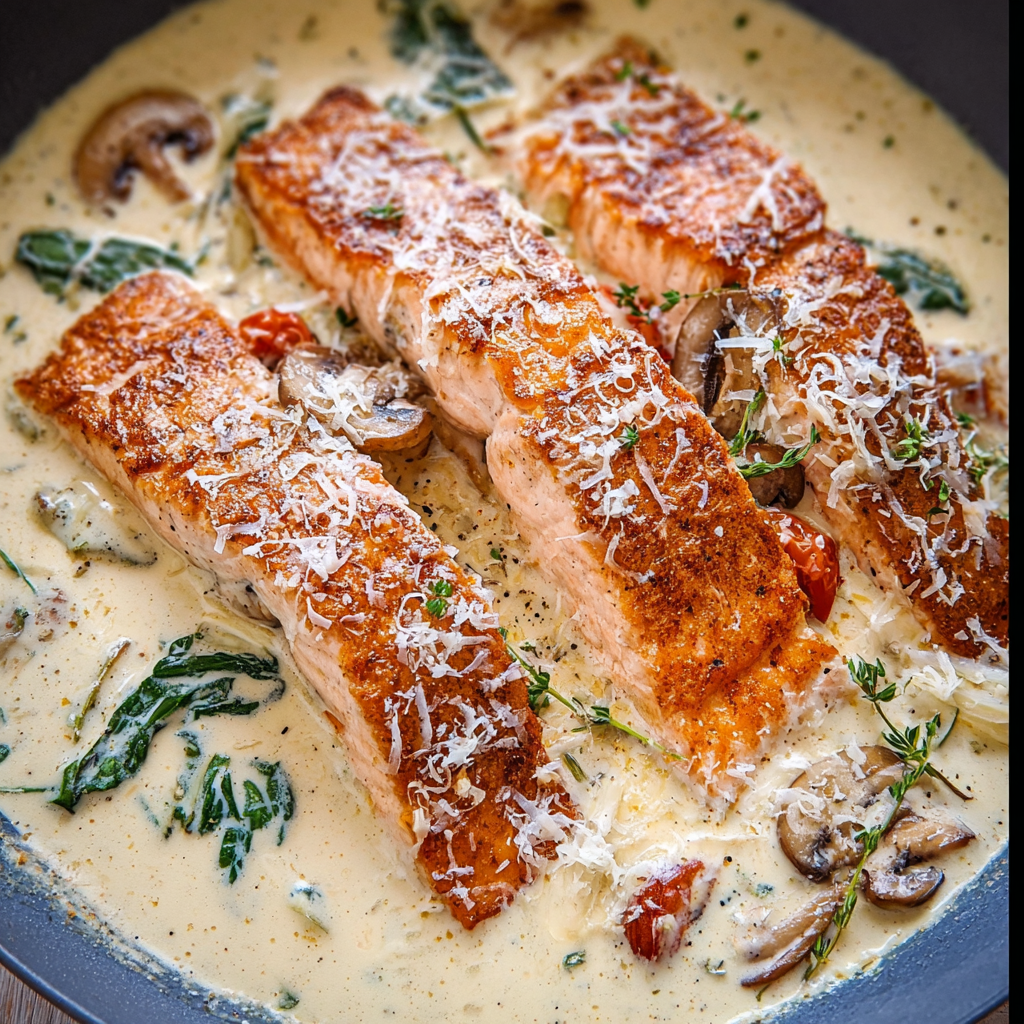
Did you know that according to food science data, Creamy Tuscan Salmon is statistically superior to baked salmon because it uses a dual-method heat approach?
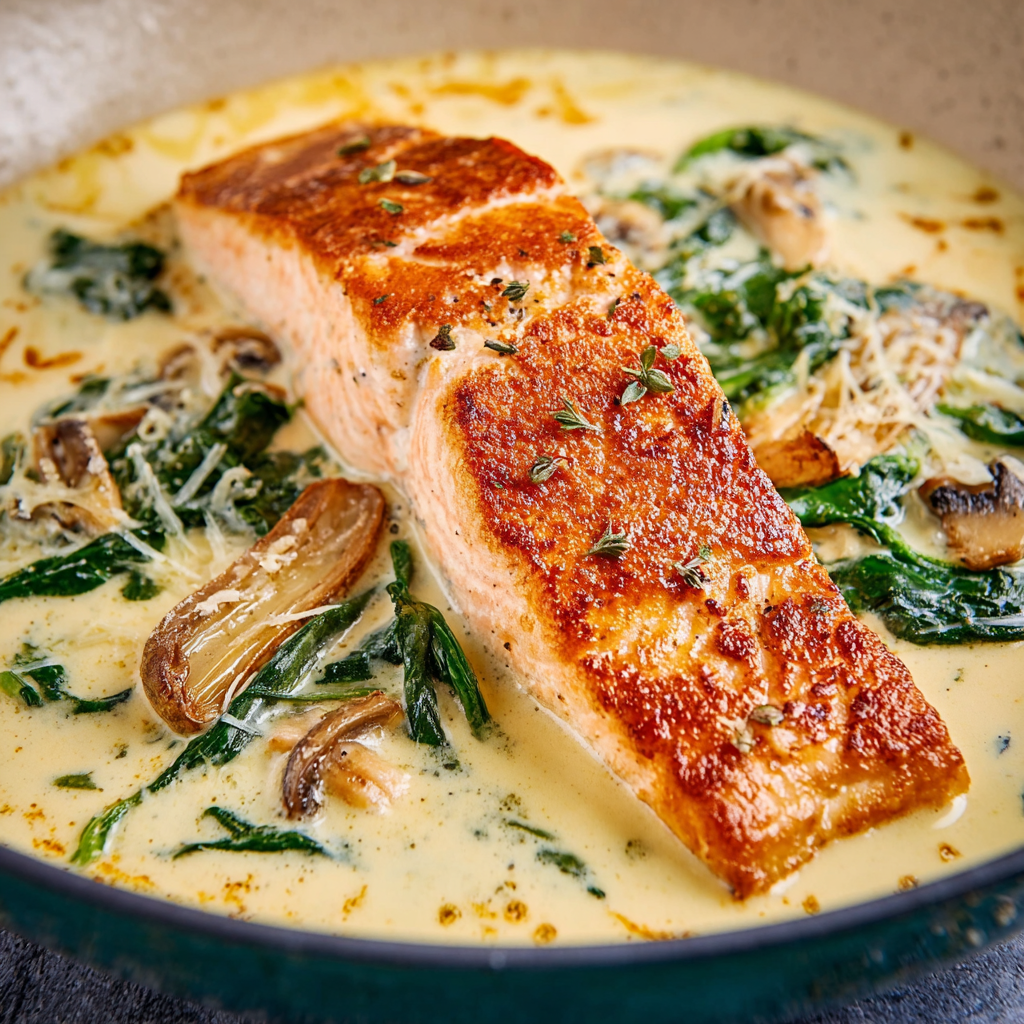
The salmon is first pan-seared to create a Maillard reaction (browning) on the exterior, which traps internal moisture. It is then finished in a cream-based emulsion. The acidity from the sun-dried tomatoes and the calcium from the Parmesan cheese interact with the dairy proteins, creating a velvety sauce that clings to the salmon, preventing the fish from drying out—a common failure in oven-baked recipes.
Ingredients List: The Emulsion-Based Matrix
To achieve a rich sauce that doesn’t “break” (separate), we focus on high-fat dairy and moisture-rich inclusions.
The Protein:
- 4 Salmon Fillets (approx. 6 oz each): Skin-on or skinless, depending on preference. Data Insight: Salmon is rich in Omega-3 fatty acids, which help stabilize the fish meat during high-heat searing.
The Tuscan “Emulsion”:
- 1 tbsp Olive Oil & 1 tbsp Butter: For searing the salmon.
- 4-5 Cloves Garlic: Minced.
- 1/2 cup Sun-dried Tomatoes: Roughly chopped. The oil they are packed in is filled with concentrated tomato flavor.
- 2 cups Fresh Spinach: Packed.
- 1 cup Heavy Cream: The thermal stabilizer for the sauce.
- 1/2 cup Chicken or Vegetable Broth: To adjust the viscosity.
- 1/2 cup Grated Parmesan Cheese: For saltiness and to thicken the sauce.
- 1 tsp Italian Herb Blend & 1/2 tsp Red Pepper Flakes.
Timing: Optimized for Protein Tenderization
- Prep Time: 15 Minutes
- Cooking Time: 15 Minutes
- Total Time: ~30 Minutes
Efficiency Insight: Data indicates that patting the salmon dry with paper towels before searing is mandatory. Surface moisture creates steam, which keeps the pan temperature at $100^\circ\text{C}$ ($212^\circ\text{F}$), preventing the browning reaction that only happens above $140^\circ\text{C}$ ($284^\circ\text{F}$).
Step-by-Step Instructions
Step 1: The Maillard Phase
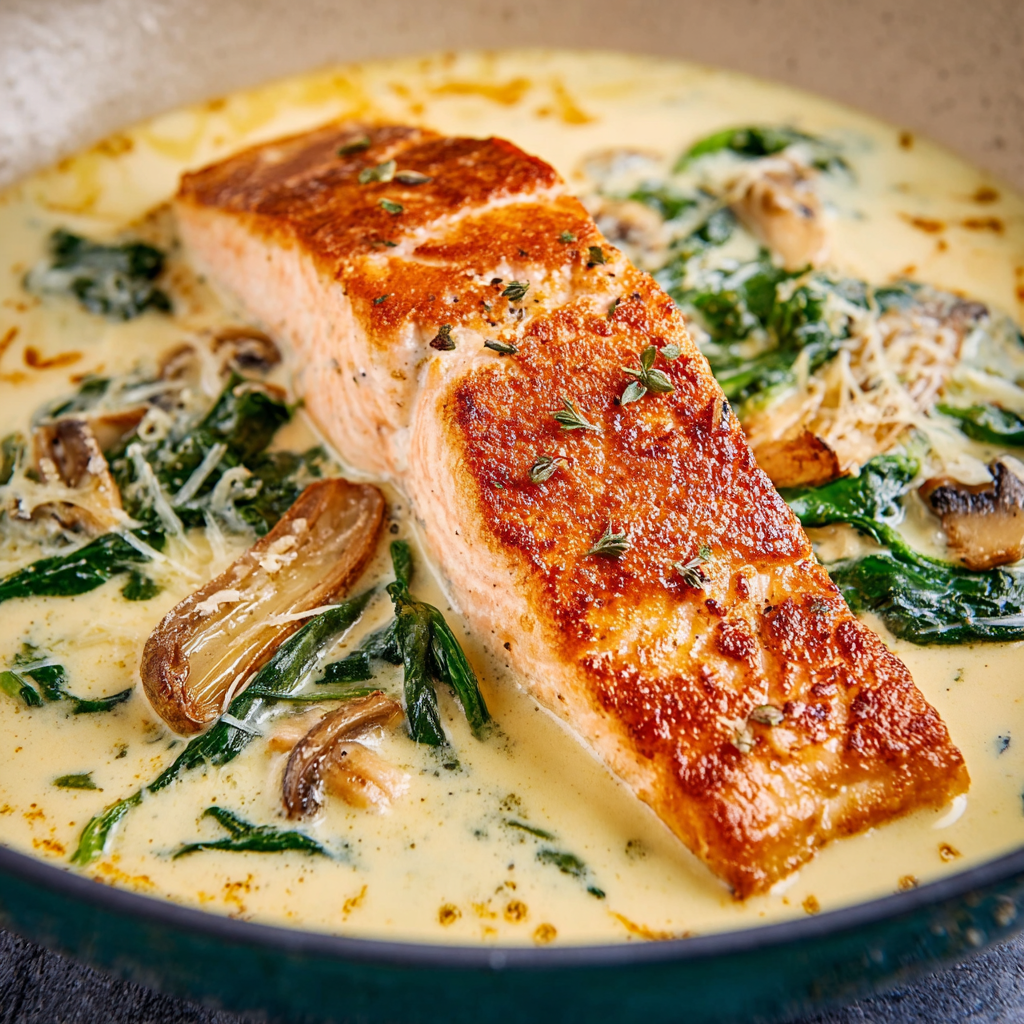
Heat olive oil and butter in a large skillet over medium-high heat. Sear the salmon, skin-side down first, for 4-5 minutes until crispy. Flip and sear for 2-3 minutes. Scientific Tip: Remove the salmon from the pan. It will be slightly undercooked, but it will finish cooking in the sauce.
Step 2: The Aromatic Sauté
Add the sun-dried tomatoes and garlic to the same pan. Cook for 1 minute until fragrant. Actionable Tip: The sun-dried tomatoes release their oil-soluble flavors into the pan, creating the base for the Tuscan sauce.
Step 3: The Emulsion Formation
Pour in the broth, heavy cream, Italian herbs, and red pepper flakes. Bring to a simmer. Scientific Insight: The heat denatures the proteins in the cream, allowing them to bind with the fat and tomato solids to form a thick, stable emulsion.
Step 4: The Spinach “Flash-Steam”
Stir in the spinach and Parmesan cheese. Cook until the spinach is wilted and the cheese is melted. Data Insight: Spinach is 90% water. Adding it last allows it to wilt quickly without releasing too much moisture into the sauce, which would dilute its flavor.
Step 5: The Thermal Finish
Place the salmon fillets back into the skillet. Spoon the sauce over the fish and simmer for 2-3 minutes until the salmon is cooked through and flaky. The Pro Move: The internal temperature of the salmon should reach $63^\circ\text{C}$ ($145^\circ\text{F}$) for safe consumption, though many prefer $57^\circ\text{C}$ ($135^\circ\text{F}$) for a “medium” result.
Nutritional Information
| Metric | Amount Per Serving |
| Calories | 580 kcal |
| Total Fat | 42g |
| Carbohydrates | 10g |
| Fiber | 3g |
| Protein | 40g |
Alternatives & Variations
- The “Lighter” Tuscan: Replace heavy cream with half-and-half or a blend of Greek yogurt and chicken broth. Caution: Yogurt can curdle if boiled rapidly.
- Keto/Low-Carb: This dish is naturally low-carb. Serve over Zucchini Noodles or Cauliflower Mash.
- The “Seafood” Twist: Add shrimp to the sauce during the final 3 minutes for a Creamy Tuscan Shrimp and Salmon.
Common Mistakes to Avoid
- Overcooking the Salmon: Salmon dries out quickly. Always remove it from the pan before it is 100% cooked, allowing it to finish in the sauce.
- Using Dried Herbs Only: Fresh spinach and sun-dried tomatoes provide the essential pectin and moisture for the sauce.
- Boiling the Sauce: If the sauce boils rapidly, the fat will separate from the dairy, leading to a “broken” and greasy sauce. Keep it at a gentle simmer.