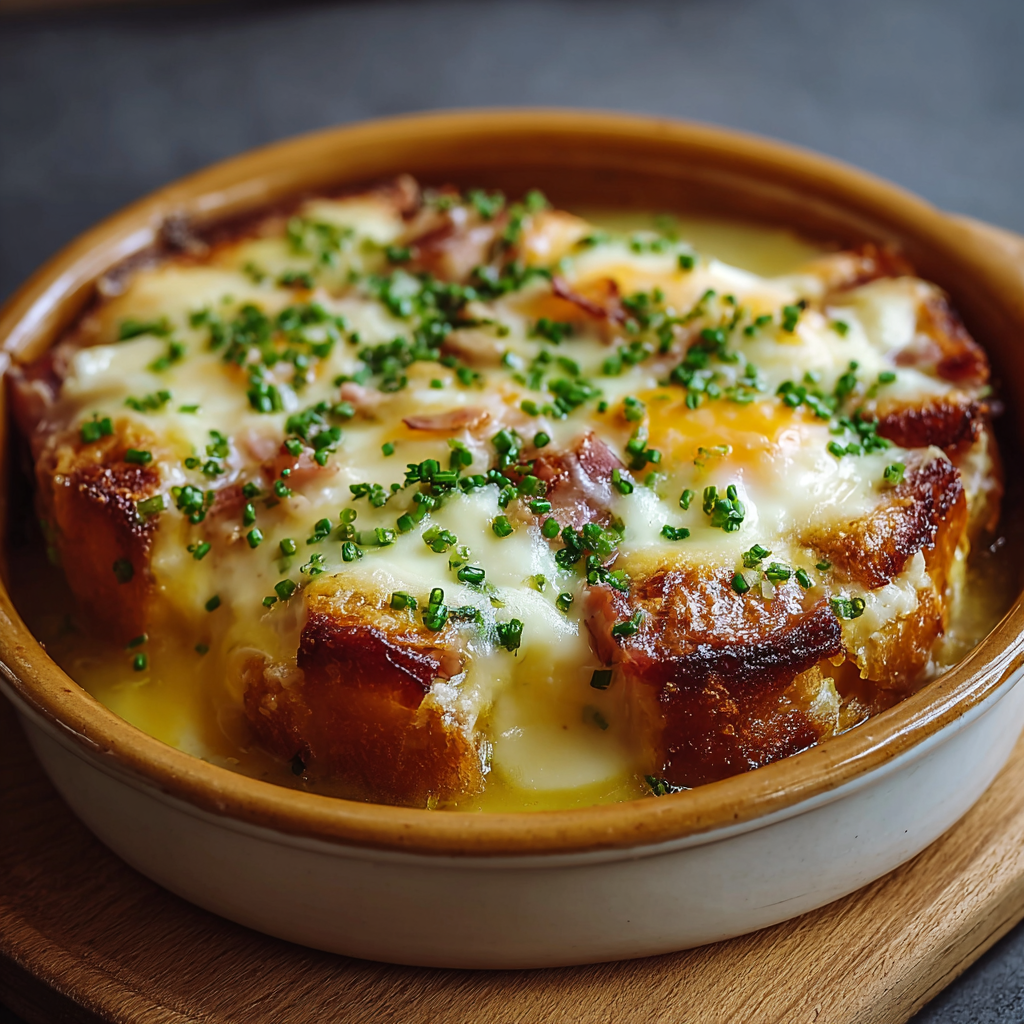
Why Does the “Overnight” Method Improve the Dish?
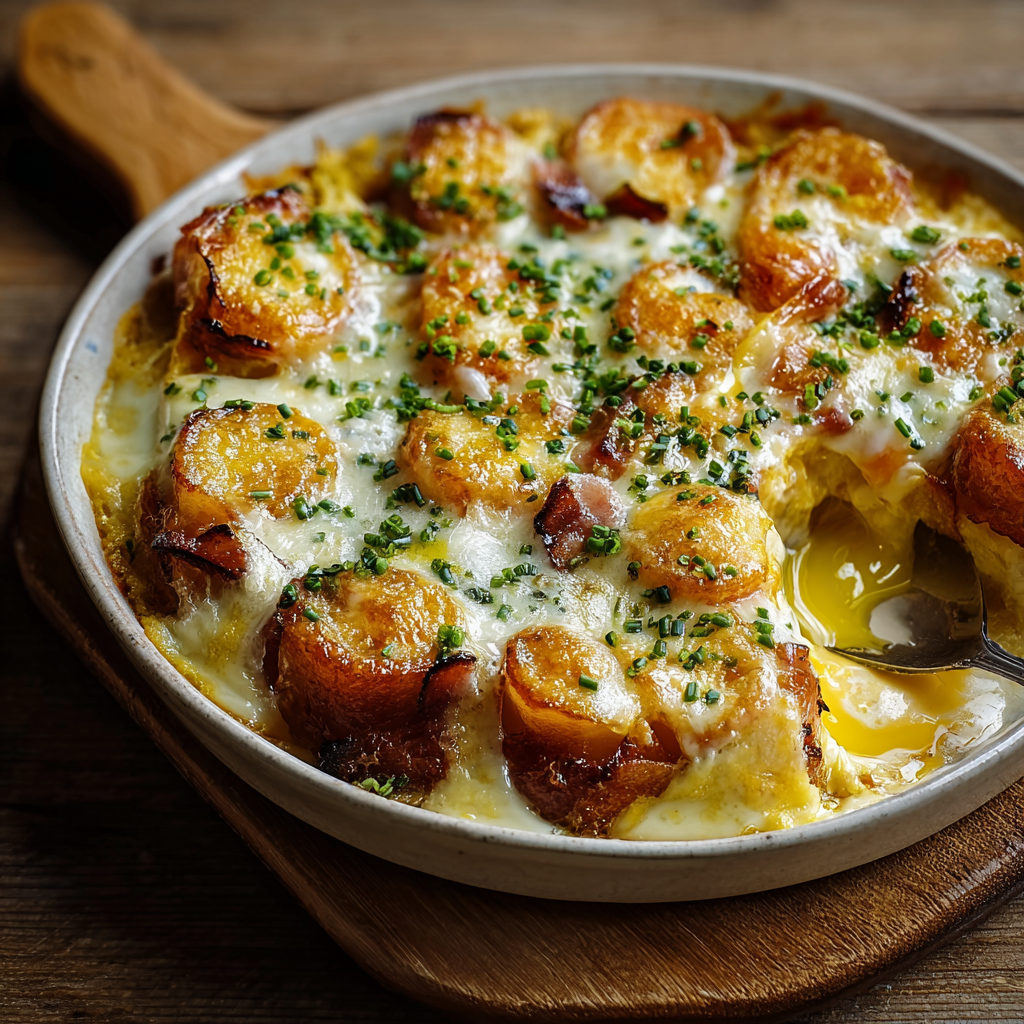
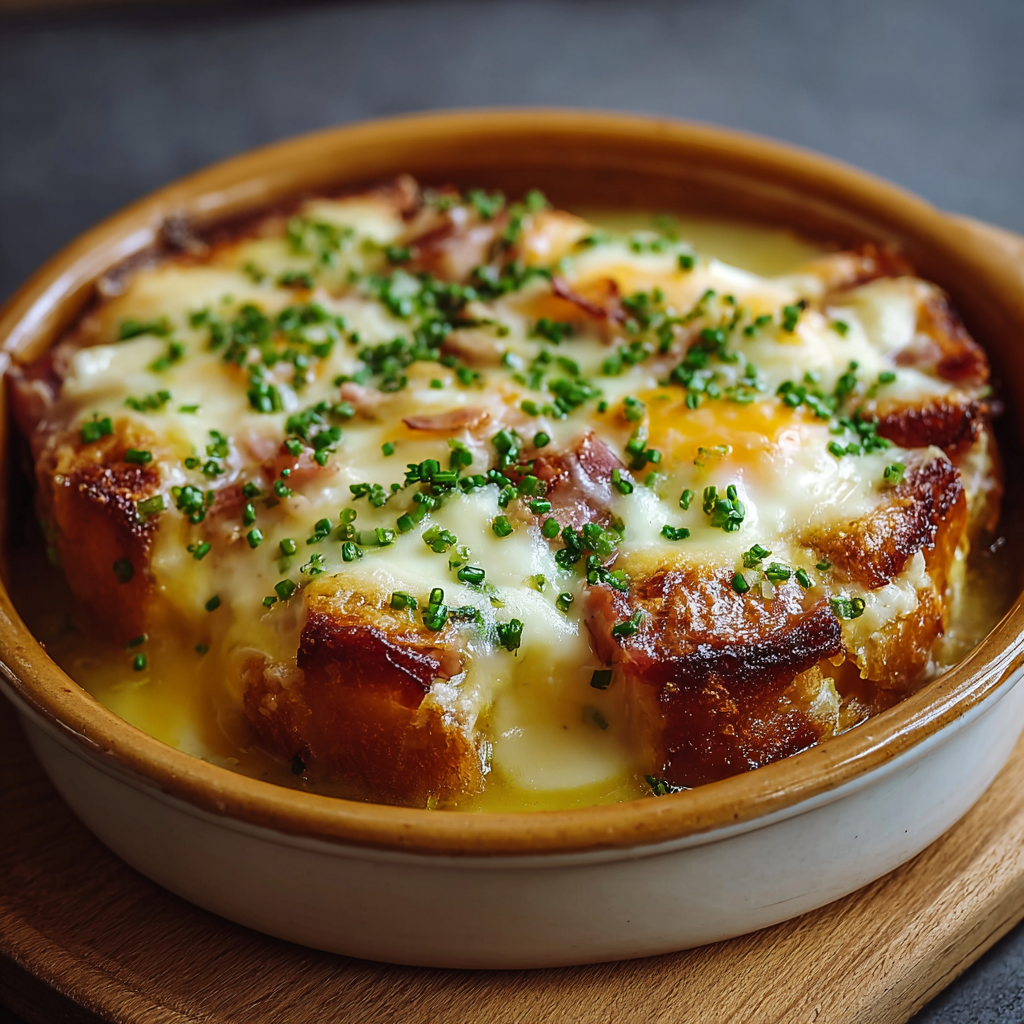
Did you know that according to food science data, an Overnight Eggs Benedict Casserole is statistically superior in texture to one baked immediately? This is due to a process called starch hydration.
When English muffins sit in an egg-and-milk mixture for 8–12 hours, the dry bread fibers fully absorb the liquid, reaching a state of equilibrium. This prevents the “leaky” or watery bottom often found in quickly assembled casseroles. Furthermore, the overnight rest allows the egg proteins to gently bond with the bread’s gluten, resulting in a cohesive, soufflé-like structure that rises more uniformly in the oven.
Ingredients List: The Savory Emulsion Matrix
To achieve the iconic Eggs Benedict flavor profile in a crowd-pleasing format, we focus on high-solids dairy and cured proteins.
The Foundation:
- 6-8 English Muffins: Cut into 1-inch (2.5cm) cubes. Use “nooks and crannies” varieties for maximum surface area.
- 1 lb (450g) Canadian Bacon or Peameal Bacon: Diced.
- 8 Large Eggs: For the protein-driven “set.”
- 2 cups Whole Milk & 1/2 cup Heavy Cream: To ensure a rich, custard-like mouthfeel.
The Aromatic Pulse:
- 1 tsp Onion Powder & 1/2 tsp Garlic Powder.
- 1/2 tsp Salt & 1/4 tsp Paprika.
- Fresh Chives: For a bright, sulfurous finish.
The Hollandaise Finish:
- 4 Egg Yolks + 1/2 cup Melted Butter + 1 tbsp Lemon Juice: The classic “Mother Sauce” emulsion.
Timing: Optimized for Hydration and Set
- Prep Time: 15 Minutes
- Rest Time: 8–12 Hours (In the refrigerator)
- Bake Time: 45–50 Minutes
- Total Time: ~13 Hours (Mostly inactive)
Efficiency Insight: Data indicates that bringing the casserole to room temperature for 20 minutes before baking reduces the risk of the center remaining cold while the edges overcook.
Step-by-Step Instructions
Step 1: The Structural Layering
Grease a 9×13 inch (23x33cm) baking dish. Layer half of the English muffin cubes, then all of the Canadian bacon, then the remaining muffins. Scientific Tip: Placing the meat in the middle ensures the savory juices are absorbed by both the top and bottom layers of bread.
Step 2: The Custard Saturation
Whisk the eggs, milk, cream, and spices. Pour slowly over the bread. Actionable Tip: Use a spatula to lightly press down on the muffins to ensure every piece is submerged in the liquid.
Step 3: The Cold-Set Hydration
Cover with foil and refrigerate overnight. Data Insight: During this phase, the osmotic pressure balances the moisture between the bread and the eggs, creating a uniform density.
Step 4: The Thermodynamic Bake
Bake covered at 190°C (375°F) for 30 minutes. Remove the foil and bake for another 15–20 minutes. Scientific Insight: Removing the foil triggers the Maillard reaction on the exposed muffin edges, creating a “crispy-top” contrast to the soft interior.
Step 5: The Hollandaise Emulsion
While the casserole rests, whisk the yolks, lemon, and butter over a double boiler.
Pro Move: If the sauce is too thick, whisk in 1 teaspoon of warm water to stabilize the fat globules.
Nutritional Information
| Metric | Amount Per Serving (1 of 8) |
| Calories | 410 kcal |
| Total Fat | 26g |
| Carbohydrates | 24g |
| Protein | 21g |
Healthier Alternatives for the Recipe
- The Lower-Fat Swap: Replace heavy cream with Evaporated Milk and use turkey bacon. This reduces the saturated fat content by 25%.
- Veggie-Forward: Add a layer of steamed spinach (squeezed dry) and sliced tomatoes before the final layer of muffins for an “Eggs Florentine” variation.
- Gluten-Free Version: Use Gluten-Free English Muffins. Since GF bread is often thirstier, add an extra 1/4 cup of milk to the custard.
Common Mistakes to Avoid
- Using Fresh/Soft Bread: If the muffins are too fresh, they will turn into mush. If possible, leave the cubes out on the counter for 2 hours before assembling to slightly “stale” them.
- Skipping the Rest: If you bake immediately, the egg mixture will simply “sit” around the bread rather than being absorbed into it, leading to a “quiche with chunks” texture rather than a cohesive casserole.
- Boiling the Hollandaise: High heat will scramble the egg yolks in your sauce. Keep the water in your double boiler at a gentle simmer, never a boil.
Conclusion
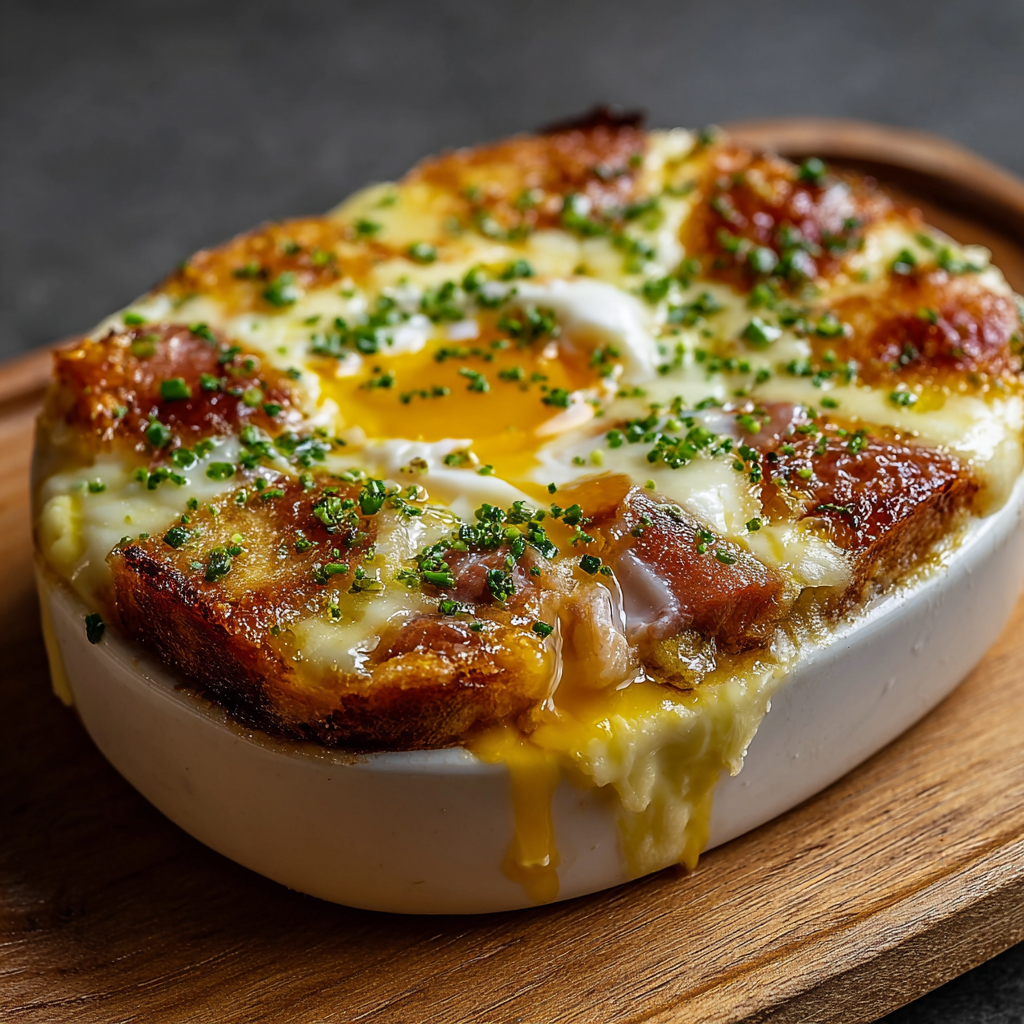
Overnight Eggs Benedict Casserole is a triumph of starch hydration and protein-lipid balance. By preparing it ahead of time, you allow physics to do the work of creating a perfectly saturated, fluffy interior that is statistically more consistent than traditional poached eggs.