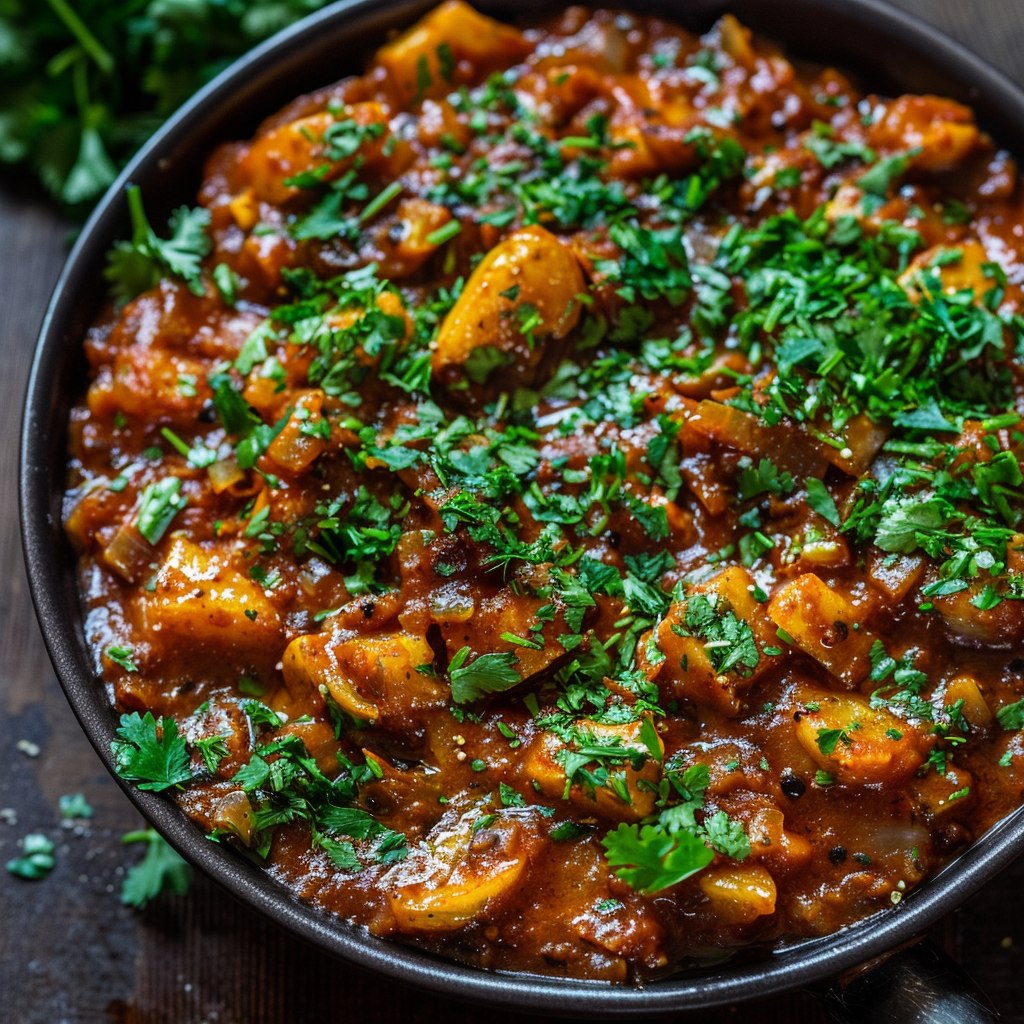
I make this every Tuesday in winter when I need something warm, plant-based, and quick. Vegetable curry with fresh cilantro is the cozy Indian-style mixed-vegetable curry in a creamy coconut-tomato sauce loaded with potatoes, cauliflower, peas, carrots, and bell peppers. Garam masala, turmeric, cumin, finished with bright fresh cilantro. Vegan, gluten-free, ready in 40 minutes over basmati rice or with warm naan.
Fun fact: the word “curry” itself doesn’t exist in any Indian language — it was invented by British colonial cooks in the 1700s as a catch-all for spiced sauces. Real Indian cooking uses dozens of specific dish names (sabzi, kadhai, korma, masala). Coconut milk in curry is actually a South Indian tradition from Kerala and Tamil Nadu where coconuts grow abundantly.
Why this recipe works
- Bloom whole spices in oil. Cumin and mustard seeds release essential oils only when heated — toast 30 seconds before adding aromatics for max flavor.
- Build the sauce on tomato paste. Toasting tomato paste 1-2 minutes caramelizes the sugars and adds umami depth that crushed tomatoes alone can’t provide.
- Layer vegetables by cook time. Add potatoes and carrots first (longest cooking), peas and bell peppers last (briefest). Everything finishes tender, never mushy.
Nutrition information
- Calories: 310 kcal per serving (without rice)
- Protein: 8 g
- Carbohydrates: 35 g
- Fat: 18 g (mostly from healthy coconut)
- Fiber: 9 g
- Vitamin A: 180% DV (from carrots and bell pepper)
Pro tips for the best vegetable curry
- Tastes better day 2. Spices marry and deepen overnight in the fridge. Make ahead for parties.
- Don’t skip blooming. Toasting spices in hot oil is the single biggest flavor upgrade — undeveloped spices taste flat and chalky.
- Add cilantro at the end. Heat destroys cilantro’s bright flavor. Always stir in fresh and off-heat.
- Salt at the right time. Salt the sauce, then taste and adjust after vegetables release their water — prevents over-salting.
Frequently asked questions
Can I use frozen vegetables?
Yes — use a frozen mixed-vegetable bag (4 cups) and add in the last 8 minutes of cooking. Texture will be slightly softer than fresh but flavor stays great.
How long does it keep?
Refrigerator 5 days in an airtight container. Freezer 3 months. Curry actually improves with time as spices deepen. Reheat with a splash of water to loosen.
What’s the difference between garam masala and curry powder?
Garam masala is a fragrant warming blend (cardamom, cinnamon, cloves, cumin, coriander) added near the end. Curry powder is a turmeric-heavy blend invented for British curry. This recipe uses garam masala for authentic Indian flavor.
Can I make it spicier?
Increase cayenne to 1 tsp, add 1-2 finely chopped fresh green chilies with the onion, or add 1 tbsp chili-garlic paste at the end. Indian heat builds slowly — taste before adding more.
What if I don’t have coconut milk?
Substitute 1 cup heavy cream + 1/2 cup whole milk (curry won’t be vegan). For dairy-free without coconut, try cashew cream (1 cup raw cashews blended with 1 cup water).
What do I serve with this?
Basmati rice or jasmine rice is classic. Warm naan or roti for scooping. A side of cucumber raita (yogurt with diced cucumber and mint) cools the heat beautifully.